
The Logical Paradox of ESG-Screened AI Memory ETFs – Excluding High-Energy Memory Makers
AI memory is hot. ESG is hot. Put them together and you get something that looks clever on paper: an ESG-screened AI memory ETF, promising exposure to the hardware bottleneck that powers neural networks while still respecting environmental, social, and governance criteria. It sounds neat. It may even sound inevitable. But once you dig under the narrative, a paradox appears: the companies that dominate AI memory are also the ones consuming enormous amounts of energy and resources. Screening them for ESG while simultaneously making them the cornerstone of an AI storage and computing theme is not as simple as a checklist.
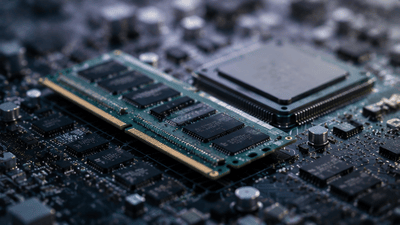
This post explores that paradox: how ESG frameworks collide with the reality of “exclusive high energy memory makers,” and what that means for designing and using AI memory ETFs and index derivatives. The tone will move a bit—sometimes analytical, sometimes more reflective—because the topic lives at the crossroads of metrics and ethics.
Memory Makers as AI’s High-Energy Core
Let’s start with the physical reality. High-bandwidth memory (HBM), DRAM, and advanced NAND are not abstract— they are manufactured in fabs that run 24/7, using high-purity chemicals, extreme lithography, and enormous amounts of electricity and water. The major memory chipmakers operate huge industrial complexes and, increasingly, dedicated lines tailored to AI data center demand. These plants:
- Draw massively from electrical grids, often needing their own substations.
- Depend on complex supply chains for materials and equipment.
- Produce high-value chips but also create waste streams and emissions that must be managed.
When AI models multiply in size, these memory makers ramp production. Their energy footprint rises in step, even when they invest in efficiency. That’s precisely why investors look to them for AI storage and computing exposure—but it’s also why they land squarely in the crosshairs of ESG discussions.
ESG Screening: What It Claims to Do

ESG (Environmental, Social, Governance) screens in ETFs are typically designed to:
- Exclude companies that fail certain thresholds (for example, coal exposure, severe controversies, weak governance).
- Tilt portfolios toward firms with relatively better ESG scores within a sector.
- Communicate a commitment to sustainability without abandoning mainstream investment themes.
In practice, ESG-screened AI memory ETFs would use a set of criteria: carbon intensity per unit of revenue, renewable energy usage, compliance records, labor standards, board independence, and more. The hope is that by applying these filters, investors can hold “cleaner” exposure to the memory boom, enjoying the theme while still aligning with ESG values.
But here’s the catch: memory manufacturing is inherently energy-intensive. Even the best performers are high-energy users compared to many other sectors. Screening within this niche means you are choosing among high-energy names, not between high-energy and low-energy businesses. It’s a relative game, not an absolute one. That’s where the paradox begins.
The Exclusive Club: Oligopoly Meets ESG
AI memory markets, especially HBM and leading-edge DRAM, are dominated by a tiny number of companies. In many cases:
- Three firms control the vast majority of HBM supply.
- A handful of manufacturers produce most of the server DRAM and high-end NAND used in AI data centers.
- These firms are all deeply industrial and energy-intensive, even if some are improving on ESG metrics.
An ESG-screened AI memory ETF designed to track this theme will almost inevitably be concentrated in this exclusive club. Even if one or two firms are excluded based on controversies or poor scores, the remaining players still constitute a high-energy oligopoly. You don’t escape the energy intensity; you only reshuffle its weight. The paradox is that ESG screening doesn’t fundamentally change the nature of the exposure. It refines it, but the core reality remains— high energy memory makers dominate the theme.
The Logical Paradox: “Green Exposure” to a High-Energy Bottleneck

The paradox can be stated in a simple way:
You want an ESG-friendly way to invest in AI’s memory bottleneck. But the bottleneck itself is created by manufacturing and operating high-energy hardware at scale. The more successful the theme, the more energy flows through these systems. By investing in ESG-screened memory ETFs, you might be:
- Supporting the scaling of high-energy infrastructure, even if some firms manage that energy more responsibly.
- Benefiting financially from growth that may increase absolute emissions, regardless of improvements in intensity.
- Calling the exposure “green” because it passes screens, even though its core economic engine depends on energy-heavy operations.
In other words, the ESG label focuses on relative performance and process, while the underlying theme is absolute in its energy demands. The ETF investor may feel aligned with ESG values, but the economic reality they profit from is what it is: more memory production, more AI workloads, more energy use.
Index Derivatives and the ESG Overlay
Index derivatives—futures, options, swaps linked to ESG-screened AI memory indices—add another layer. They allow:
- Leveraged exposure to ESG-screened memory themes.
- Portfolio hedging or overlays that tilt an existing semiconductor allocation toward “ESG memory.”
- Tactical trades that express views on ESG leadership among memory makers.
The paradox persists, but becomes more abstract. You can be:
- Long ESG-memory index futures while short generic semiconductor indices, effectively betting that “cleaner” memory makers will outperform.
- Buying options on ESG memory ETFs to amplify upside, even though the theme’s growth is still strongly tied to high-energy AI infrastructure.
Derivatives make exposure more flexible, but they don’t change the underlying reality. They reshape risk and return profiles. They don’t, by themselves, transform the energy nature of the theme.
Possible Ways ESG Tries to Resolve the Paradox

If we take ESG frameworks at face value, there are several ways they might try to resolve or soften the paradox:
- Focus on intensity, not absolute usage: Reward memory makers that reduce energy per bit produced, or per unit of revenue, even if absolute energy use rises as AI demand grows.
- Highlight renewables and efficiency: Tilt toward firms that source more power from renewables, invest in more efficient fab technologies, or build data centers with better PUE (Power Usage Effectiveness).
- Address governance and social practices: Concentrate not just on environmental metrics but also on labor rights, safety, diversity, and governance, arguing that ESG is multi-dimensional and not purely about emissions.
These approaches have merit. They reflect genuine differences between companies. Yet they also underscore that ESG screening in this context is about relative grading, not absolute absence of energy intensity. The paradox becomes less “contradiction” and more “tension”: you accept that the theme is energy-heavy, but you try to favor the better actors within it.
Investor Perspectives: Values vs Exposure
From an investor’s viewpoint, the paradox shows up as a set of trade-offs:
- If you want pure AI memory exposure, you will be investing in high-energy manufacturers by definition.
- If you want ESG alignment, you can screen and tilt, but you cannot fully avoid the energy-heavy nature of the theme if you stay in memory.
- If you want to lower absolute energy involvement, you may need to move away from hardware themes altogether—toward software efficiency or non-AI sectors.
This leads to different investor reactions:
- Pragmatists: Accept the paradox, focus on better memory makers within an energy-heavy sector, and use ESG screens to avoid the worst practices rather than the whole theme.
- Idealists: Question whether ESG and high-intensity AI memory investments are compatible, and perhaps limit or avoid such themes entirely.
- Strategic allocators: Combine ESG-screened memory ETFs with other low-carbon or transition-aligned exposures, using portfolio-level design to balance out the energy-heavy segments.
There is no single “correct” reaction. The paradox forces each investor to decide how they weigh values against thematic exposure.
Design Considerations for ESG AI Memory ETFs
For product designers, the paradox is not just philosophical; it affects how an ESG AI memory ETF is built and communicated. Key design questions include:
- How strict are the screens? Do you exclude companies based on absolute emissions, or focus on intensity and improvement trajectories?
- How concentrated is the portfolio? If three high-energy memory makers dominate, does the ETF lean heavily into them, or deliberately diversify into storage, controllers, and data-center efficiency firms?
- How transparent is the messaging? Does marketing clearly state that the theme is energy-intensive even as it emphasizes ESG alignment?
- How do you handle engagement? Are stewardship, voting, and direct engagement part of the story, aiming to influence those high-energy memory makers toward better practices?
Well-designed ESG memory ETFs can own the tension rather than obscure it. They can say, in effect: “This sector is critical, complex, and energy-intensive; within it, we seek to support those firms that are improving and managing their responsibilities better.”
Nonlinear Futures: AI, Efficiency, and ESG Evolution
Looking ahead, the paradox might not stay fixed. AI and memory technologies evolve. Several scenarios could alter the ESG landscape:
- Improved manufacturing efficiency: Memory fabs might become significantly less energy-intensive per unit output through process innovation and design improvements.
- Stronger renewable integration: Memory makers could shift much of their power usage to renewable sources, reducing carbon intensity even as production rises.
- Architecture changes: AI computing could move toward architectures that require less memory bandwidth per unit of work, or make better use of near-memory computing, reducing pressure on the most energy-hungry configurations.
In these scenarios, ESG-screened memory ETFs could move from paradox to partnership: the theme still uses energy, but does so in a way that aligns more clearly with decarbonization and efficiency goals. The logical tension between “ESG” and “high-energy memory” would soften, though likely not disappear entirely.
A More Honest Way of Thinking About “Green Memory”
Ultimately, the logical paradox of ESG-screened AI memory ETFs is a call for more honest thinking. Instead of treating ESG labels as a simple stamp that transforms any theme into “green,” it invites us to:
- See the full picture of what memory production entails.
- Recognize that ESG in this context is about better or worse, not clean or dirty.
- Use ETFs and index derivatives as tools for expression and engagement, not as moral absolution.
For AI storage and computing power themes, where physical infrastructure and energy use are central, such honesty becomes particularly important. Memory makers are exclusive, powerful, and high-energy; that is precisely why they define the bottleneck and the opportunity. ESG screening doesn’t change that core fact. It shows us how those companies compare to each other in managing their responsibilities—and offers a way to reward the ones that are genuinely trying to do better.
If investors and designers can live with that nuance, ESG-screened AI memory ETFs and derivatives can be meaningful tools rather than paradoxical slogans. They become ways to navigate a complex landscape where technology, energy, and ethics intertwine, rather than pretend those knots don’t exist.
You May Like

Narrowing Spread Between NAND Spot and Contract Prices in 2026 – A Signal
By 2026, one of the most watched metrics in the NAND flash market has started to shift in a subtle but meaningful way: the spread between spot prices and long‑term contract prices is narrowing. For casual observers, this may look like just another incremental change in a notoriously volatile industry. For memory makers, module houses, device OEMs, and data center buyers, however, a tightening gap between spot and contract prices is a signal—a reflection of evolving supply–demand balance, risk perceptions, and strategic behavior on both sides of the market.

Price Divergence Trading Strategies Between NAND Flash and DRAM ETFs
NAND flash and DRAM sit at the core of AI storage and computing power. Both are memory, but they are not the same business. DRAM is main memory—fast, volatile, and central to high‑bandwidth workloads like AI training and inference. NAND is non‑volatile storage—slower than DRAM, but crucial to persistent data and large‑scale object storage. The cycles that drive their pricing and margins overlap, yet they often diverge. That divergence is where trading strategies between NAND and DRAM ETFs become interesting.

China’s HBM Localization Progress: The Catch-Up Pace of CXMT and XMC
China’s drive to localize advanced memory technologies has accelerated over the past several years. High-Bandwidth Memory (HBM) sits near the center of that strategy because it is integral to AI accelerators, high-performance computing (HPC) and other strategic compute platforms. Two domestic players—ChangXin Memory Technologies (CXMT) and XMC (Xianghui Memory, commonly referred to as XMC)—have become focal points in assessing how quickly China can close the gap with international incumbents on HBM die, stacking, and packaging.

Thermal Simulation Challenges and Solutions in 3DIC AI Chip Design
As AI workloads push chips to deliver ever higher compute density, designers are increasingly turning to three‑dimensional integration (3DIC) to stack dies vertically and pack more functionality into limited footprints. While 3DIC architectures unlock significant performance and bandwidth advantages, they also introduce complex thermal behaviors that are far harder to predict and manage than in traditional 2D layouts.

An Attempt at Compiling a Memory+Compute Fusion Thematic Index – A Dual-Track Framework
Most AI investors talk about “compute” as if it were the whole story: GPUs, accelerators, chips, cores. But every one of those cores needs somewhere to read from and write to. Memory and storage define how wide the data highway really is. In practice, AI performance is a fusion of compute and memory, not a solo act. So why do so many indices and ETFs separate them into different silos—one for semiconductors, one for memory, one for data centers—when the actual workloads keep blending them?

Surging Demand for Laser Drilling and Plasma Dicing Equipment in Advanced Packaging
Advanced packaging has become one of the semiconductor industry’s most important growth engines, and it is now pulling a surprising set of process tools into the spotlight. Among the most in-demand are laser drilling and plasma dicing equipment. These machines sit close to the heart of heterogeneous integration, fan-out packaging, wafer thinning, TSV formation, glass substrate processing, and other advanced flows where precision, yield, and throughput matter enormously. As packaging moves from a back-end afterthought to a strategic platform, the equipment used to shape, open, and separate materials has become just as important as the dies themselves.
D2D Interface Bandwidth and Latency Comparison in Chiplet Architectures
Chiplet architecture has turned the package into a real performance battleground. Once multiple dies are placed side by side or stacked within the same advanced package, the quality of the die-to-die, or D2D, interface becomes one of the most important determinants of system behavior. Bandwidth is no longer a nice-to-have metric, and latency is no longer a small implementation detail. Together, they shape whether a chiplet system feels nearly monolithic or frustratingly fragmented.

Stock Selection Logic and Alpha Validation of ESG-Themed Semi ETFs
Semiconductor themed ETFs are no longer just about growth and cycles. A growing subset now layers environmental, social, and governance (ESG) criteria on top of traditional sector exposure. These ESG semi ETFs promise two things at once: access to one of the market’s most powerful secular themes, and alignment with sustainability and governance standards. The pitch is appealing, but it raises two hard questions. First, how exactly are these stocks being selected? Second, does the ESG overlay help, hurt, or leave alpha unchanged?